compare the areas
Tax Rates and School Districts
Two homes five minutes apart can carry meaningfully different tax rates, because your rate is the sum of every taxing entity your address falls inside: county, school district, any Municipal Utility District, and other special districts. Knowing your specific rate before you sign a contract matters as much as knowing the interest rate on your loan.
These are final adopted 2025 rates, the most recent complete tax year. The range in the last column is the school district plus the county plus a Municipal Utility District, because nearly every new-construction community out here sits inside one. Without a MUD you would be looking at roughly 1.48% to 1.74% depending on the county, and the MUD is what carries you to the top of the range. County rates: Harris 0.62413%, Fort Bend 0.4220%, Waller 0.556187%. Published MUD ranges: Harris 0.25% to 1.50%, Fort Bend 0.18% to 1.10%, Waller 0.65% to 1.50%. Those are observed ranges rather than any legal ceiling. Taxing units adopt new rates each September and October, and MUD rates usually come down over time as the bonds are paid off, so treat this as a starting point and let me pull the exact rate for any address you are considering. Sources: Harris County Tax Assessor-Collector, Fort Bend County Tax Assessor-Collector, and the Waller County Tax Office. Verified September 2026.
A note on MUD districts
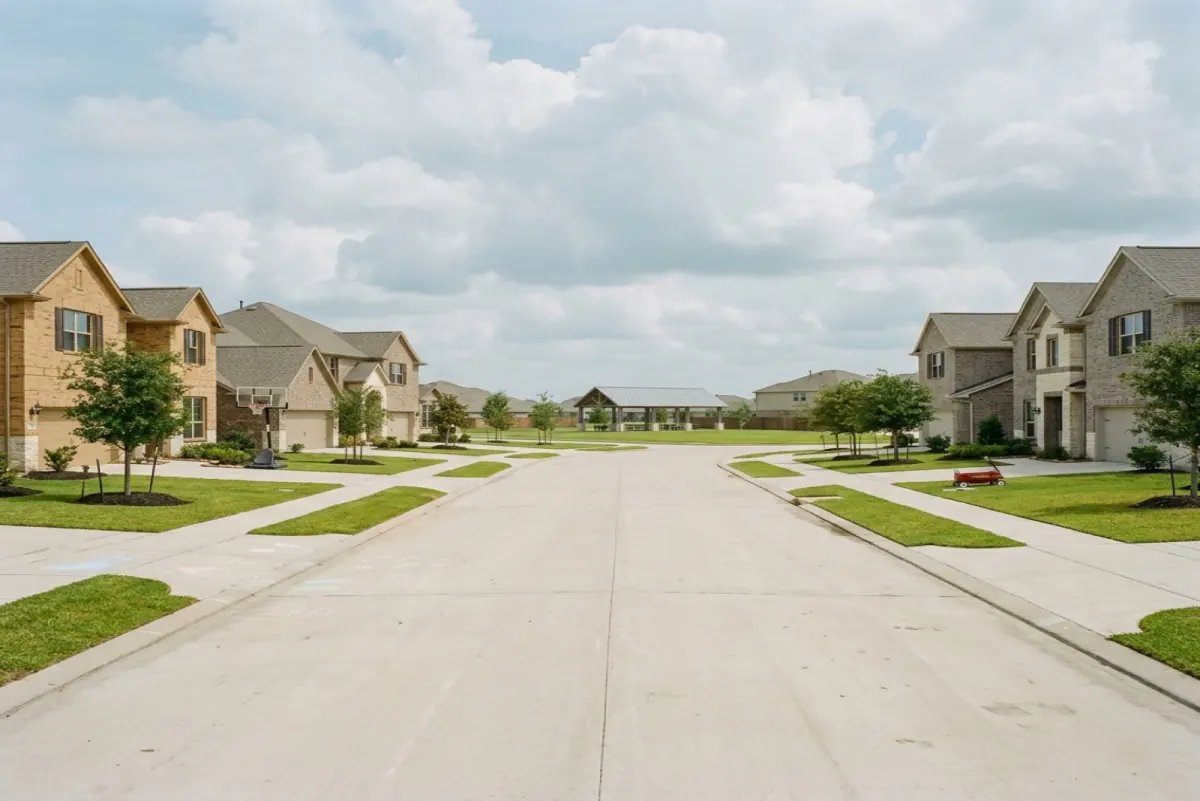
Municipal Utility Districts are common across new-construction communities in Katy, Cypress, Fulshear and the surrounding areas. When a builder develops land outside an established city's utility system, a MUD is created to finance the water lines, sewer, drainage and roads. The district issues bonds, and homeowners repay them through a MUD tax added to the property tax bill. MUD rates typically decline over time as those bonds are paid off and more homes join the tax base, so a community's rate in year one is usually its highest.
The first-year tax trap on new construction
If your home was not finished on January 1, the county assesses only the land, so your first tax bill is low and your lender sets escrow from that low number. In year two the full value of the home hits the tax rolls, and your escrow and monthly payment jump with it. Estimate the year-two figure early and set the difference aside from day one.